Showing posts with label South China Sea. Show all posts

Monday, 12 February 2018

Beijing’s militarisation of South China Sea

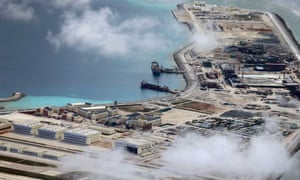
An aerial picture of Chinese construction activities in the South China Sea

Beijing has been accused of building “island fortresses” in the South China Sea after a newspaper in the Philippines obtained aerial photographs offering what experts called the most detailed glimpse yet of China’s militarisation of the waterway.
The Philippine Daily Inquirer said the surveillance photographs – passed to its reporters by an unnamed source – were mostly taken between June and December last year and showed Chinese construction activities across the disputed Spratly archipelago between the Philippines and Vietnam.
Brunei, China, Malaysia, the Philippines, Taiwan and Vietnam have overlapping claims in the region.
The Inquirer said the images showed an “unrestrained” building campaign designed to project Chinese power across the resource-rich shipping route through which trillions of dollars of global trade flows each year.
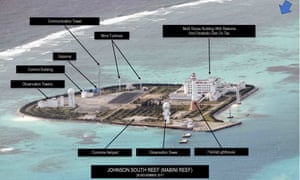
Installations on Johnson South Reef

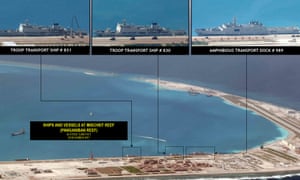
Some photographs show cargo ships and supply vessels, which the newspaper said appeared to be delivering construction materials to the China-controlled islands.
Others show runways, hangars, control towers, helipads and radomes as well as a series of multistorey buildings that China has built on reefs such as Fiery Cross, Subi, Mischief, McKennan, Johnson South, Gaven and Cuarteron.
The Inquirer described the reefs as “island fortresses”. Bonnie Glaser, an expert in Asia-Pacific security issues from the Center for Strategic and International Studies, called the images “the most complete, detailed batch of aerial pics available” of China’s military outposts in the South China Sea.

Images from the Philippine Daily Inquirer showing Mischief Reef

Responding to questions about the photographs, the presidential spokesman, Harry Roque, told reporters: “[The region has] long been militarised. And the question is, what can we do?”

He reportedly added: “What do you want us to do? We cannot declare war.”
Opposition figures hit back, accusing Duterte’s administration of betraying their “sacred core duty” to defend their country’s territory.
Experts interviewed by China’s Communist party press also shrugged off the photographs, suggesting they showed mostly civilian installations.
“Civilian facility construction is the major focus of the South China Sea islands building and the portion of defence deployment is relatively small,” Chen Xiangmiao, from the state-run National Institute for South China Sea Studies, told the Global Times.
Another Chinese expert, Zhuang Guotu, accused foreign journalists of “hyping” Beijing’s activities in the South China Sea, but added: “China has the right to build whatever it needs within its territory.” Zhuang claimed China’s military deployment was not for military expansion, but about defending its security and interests.
In December a report claimed China had created military facilities about four times the size of Buckingham Palace on contested South China Sea islands. 

Wednesday, 4 January 2017

2016 - China Arising

what is the most interesting story in 2016?

I pick 1 topic - CHINA. In the presence of her military, in economic, China footprint was very clear and determine. The message was also loud.. I'm coming and nobody can stop me.


WASHINGTON: Leading Republicans hastened today to denounce China’s deployment of anti-aircraft missiles to the South China Sea. But what can the US actually do about it? The arrival of the sophisticated HQ-9 missiles in the Paracel islands — claimed by Vietnam and Taiwan but occupied by China — is just the latest step in Beijing’s steady extension of military power into the Pacific, and it won’t be the last.
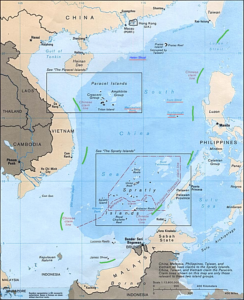
While America reacts, struggling to figure out each move, China is pursuing a long-term strategy. The Chinese have claimed the whole South China Sea, based on the notorious Nine Dash Line drawn on the map by the Chiang Kai-Shek government they ousted in 1949. Now they’re gradually filling in that area with actual capability to control it — and they’d be doing so regardless of what the US was doing.
Yes, the Paracels are where a US Navy destroyer conducted a Freedom Of Navigation Operation (FONOPS) last month challenging Chinese territorial claims. But was that operation the cause of the Chinese deployment or just a pretext for it? Two leading experts from different parts of the political spectrum both told me: pretext.
John McCain
John McCain
“The Chinese are pointing to the US operations — the FONOPS and our increased exercises in the region — and trying to pin blame on the United States. It’s a convenient justification,” said Bonnie Glaser of the militantly centrist Center for Security & International Studies. “This is really part of a plan that the Chinese have to put in place capabilities that will enable them to exert greater control over airspace and sea-space.”
External events like American operations, the recent electoral victory of Taiwan’s pro-independence party, and the just-concluded Association of South-East Asian Nations (ASEAN) summit in California may have shaped the timing and tactics of Chinese actions, said Dean Cheng of the conservative Heritage Foundation. But what’s driving the decisions is a long-term strategy to dominate the South China Sea and president Xi Jinping‘s determination to appear a strong champion of Chinese nationalism.
To the extent that political factors matter, it’s internal Chinese politics rather than geopolitics between China and the US. “The next party congress is next year, Xi Jinping is going to be replacing a whole lot of senior leaders, and the economy is slowing down,” Cheng told me. “He cannot afford to look weak.”
“The Chinese are making clear that the Paracels are theirs, both symbolically and militarily. You might as well put ‘Molon Labe‘ [‘come and take them’] on them,” Cheng said. “This is consistent with the broader Chinese effort to establish control over the South China Sea.”
(Wikimedia Commons)
The “9-dash line” describing Chinese claims to the South China Sea
The Military Significance of the Paracels
So why the Paracels in particular? First, they’re simply closer to mainland China than the also-disputed Spratly Islands. China’s been there longer, having seized them from then-South Vietnam in 1974 (and having fought there with Communist Vietnam in 1988). Second, whereas some of the Spratlys are occupied by the Philippines, the Paracels are completely under Chinese control.
The Paracels were also conveniently excluded from Xi’s carefully worded pledge not to militarize the region, Glaser told me. The pledge only covered the Spratlys — though, she added quickly, “that’s not to say Xi Jinping may not in the future militarize the Spratlys as well.”
“Militarization of the Paracels has been underway for years,” Glaser said. “What’s new here is advanced Chinese capabilities catching up with what have been long-standing claims of sovereignty.”
In the Paracels specifically, they have built a military-grade runway on Woody Island, complete with hardened hangers to resist bombardment. They’ve operated fighter aircraft there, most recently in November in response to US freedom of navigation operations. Now they’ve deployed two advanced surface-to-air missile batteries on Woody Island to protect their investment. “It’s not surprising,” Glaser said.
“The S-300/HQ-9 is a nasty piece of work,” said Cheng. The Chinese HQ-9 anti-aircraft missile system derives from the Russian S-300 — aka the SA-10, a world-class “double digit SAM” — but adds infusions of technology from the American Patriot (helpfully provided by Israel in the 1990s).
“It essentially projects an air defense keep-out zone that only the most advanced fighters and systems would dare enter,” Cheng says. “If you’re going to fly in those areas, there’s going to be a whole lot of pucker factor, and that’s true for high-performance fighter planes, never mind lumbering planes like P-3s and P-8s,” the long-range patrol aircraft typically used to reconnoiter Chinese bases.
Former Navy Undersecretary Bob Martinage was less concerned — for now. “In isolation, the apparent deployment of an HQ-9 air defense system to Woody Island has marginal operational significance,” he told me. “In the event of a conflict, it would pose a limited threat to air lines of communication in the vicinity, but could be quickly overwhelmed and neutralized. In peacetime, US reconnaissance aircraft” — mainly meaning those P-3s and P-8s — “operating within roughly 100 miles will now do so under constant threat, which may reduce crisis stability.”
But the deployment has much wider significance if it’s one step in a larger strategy, Martinage continued, “especially if this is a trial balloon to see how the United States and other regional states react….The deployment of large numbers of long-range surface-to-air missiles and anti-ship cruise missiles more widely across the South China Sea would be destabilizing, increase the threshold for US intervention in a crisis (or increasing the chances that the US would be self-deterred), and have significant operational ramifications.” Any one outpost might be manageable in isolation, but together they would form the kind of “anti-access/area denial” network that Martinage’s home institution, the Center for Strategic and Budgetary Assessments, has long warned about.
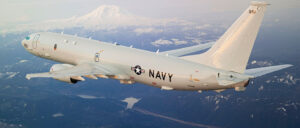
US Navy P-8 Poseidon
Next Steps For China
So if the Paracels deployment is just one step in a long-term plan, what’s next?
“We should be fully prepared and expect that the Chinese will then move on to the third of the ‘Three Sands,'” Cheng said. To assert its claims over the South China Sea, Beijing created a prefecture on Hainan Island to exercise jurisdiction over the entire area. The name of this prefecture translates to “Three Sands,” referring to the Paracels (West Sands), Spratlys (South Sands), and the Macclesfield Bank/Mischief Reef area (Middle Sands). The Chinese already have airstrips and other facilities in both the Paracels and the Spratlys, so the Middle Sands are next.
“[Expect] island building and all the rest in the Macclesfield Bank area,” Cheng said. “At that point, if you look at the map, you now have a triangle of outposts that have airfields, SAM batteries, etc. You’re not going to go into the South China Sea lightly.”
“They may declare an Air Defense Identification Zone (ADIZ) over a portion of the South China Sea,” said Glaser, probably starting with the Paracels. The Chinese already declared an ADIZ in the East China Sea over the Senkaku/Diaoyu islands, contested with Japan, in 2013. A preliminary sign the Chinese planned such a move in the South China Sea might be their declaring legal “baselines” for their territorial claims around the Spratlys, which they’ve already done for the Paracels — in a way that US and other international observers consider excessive.
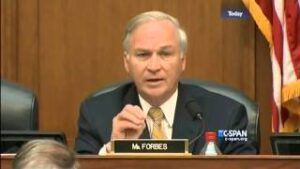
Rep. Randy Forbes
Rep. Randy Forbes
Next Steps for the US?
So what can the US do to throw a wrench in Beijing’s works? The chairmen of the Senate Armed Services Committee and the House seapower subcommittee certainly have suggestions.
“At the very time China is pronouncing its commitment to regional stability at an international conference in California, the deployment of these weapons on a disputed island should further dispel any confusion about China’s determination to play a destabilizing role in the region,” said Rep. Randy Forbes, HASC seapower chairman, in a statement this afternoon. “The United States and its partners must continue to steadfastly uphold freedom of navigation and overflight and the rule of law.”
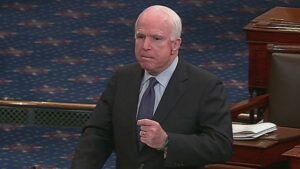
SASC chairman John McCain went further. “China’s actions in the South China Sea this week demonstrate Beijing’s continued desire to resort to militarization and coercion,” the former Navy pilot fumed in a statement. “The United States should consider additional options to raise the costs on Beijing’s behavior. Declarations that we remain committed to what amounts to an ever-changing status quo and conducting occasional freedom of navigation operations are inadequate. The day-to-day system management that is required to actually shape Beijing’s actions will mean adopting policies with a level of risk that we have been unwilling to consider up to this point.”
What kind of higher risks are we talking about? McCain didn’t specify, but our expert analysts had some ideas.
“This is China inviting the United States to climb the escalation ladder and destabilize the region,” said retired Navy captain Jerry Hendrix. “What they want the United States to do is just accept them and allow those things to be there without protest; however, that’s not acceptable, and we’ve made that clear.”
“We need to think about diplomatic and political approaches to impose a cost on the Chinese,” Cheng said. “So far no one has made the Chinese pay a price for their activities”: No one’s cancelled a major contract or un-invited them from an international conference. Indeed, Cheng noted sourly, the Chinese have been invited back to the Navy’s Rim of the Pacific (RIMPAC) exercises. The Pentagon has argued repeatedly that such military-to-military contacts reduce the chance of deadly misunderstandings in a crisis and should not be cancelled just to show show political displeasure.
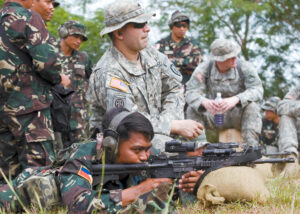
Army photo
US Army soldiers train their Filipino counterparts.
“The first thing is to not let up on FONOPS and the like,” Cheng said, as we did for three years, from 2012 through 2015. “We cannot give in [to] this idea that it’s their territorial waters…. That’s not acceptable. It throws the entire concept of international law in the trash bin.”
“Ideally, it means getting friends and allies to cooperate with us,” Cheng continued. “ASEAN is a very weak reed” — some members are landlocked with little interest in maritime disputes, others are Chinese clients — “but you may be able to create a coalition of the concerned.” Vietnam and the Philippines would be anchor members, both having bitter territorial disputes with China, but more neutral Indonesia and cautious Singapore could join in as well.
Convincing countries to stand up to China, however, runs into a “who bells the cat” problem: Almost everyone wants the job done, but no one wants to run the risks of doing it. “Some countries are very happy that the US is doing what it’s doing but they don’t’ want themselves associated with it,” Glaser said with a laugh. “That’s not surprising because any country that criticizes China may pay a price.”
Worse, so far no freedom of navigation operation, no ASEAN declaration, no legal case in the Hague, “none of these steps appears to have deterred China,” Glaser said. “All the countries in the region are worried….that regardless of what the US does, nothing can really stop China from militarizing its land features, not only in the Paracels but also in the Spratlys.”
on December 28, 2016 at 8:00 AM

Monday, 24 October 2016

PHILIPPINE PRESIDENT DUTERTE ANNOUNCES ‘SEPARATION’ FROM UNITED STATES

(Reuters) – Philippine President Rodrigo Duterte announced his “separation” from the United States on Thursday, declaring that it had “lost” and he had realigned with China as the two agreed to resolve their South China Sea dispute through talks.
Duterte made his comments in China, where he is visiting with at least 200 business people to pave the way for what he calls a new commercial alliance as relations with longtime ally the United States deteriorate.
His trade secretary, Ramon Lopez, said $13.5 billion in deals would be signed
Duterte’s efforts to engage China, months after a tribunal ruling in the Hague over South China Sea disputes in favour of the Philippines, marks a reversal in foreign policy since the 71-year-old former mayor took office on June 30.
“America has lost now,” Duterte told Chinese and Philippine business people at a forum in the Great Hall of the People, attended by Chinese Vice Premier Zhang Gaoli.
“I’ve realigned myself in your ideological flow and maybe I will also go to Russia to talk to (President Vladimir) Putin and tell him that there are three of us against the world – China, Philippines and Russia. It’s the only way,” he added.
“With that, in this venue, your honours, in this venue, I announce my separation from the United States,” Duterte said to applause. “I have separated from them. So I will be dependent on you for all time. But do not worry. We will also help as you help us.”
Duterte’s remarks will prompt fresh concern in the United States, where the Obama administration has seen Manila as a key ally in its “rebalance” of resources to Asia in the face of a rising China.
The administration agreed a deal with Duterte’s predecessor granting U.S. forces rotational access to bases in the Philippines and further doubts will be raised about the future of this arrangement.
However, a White House spokesman stressed the traditional bonds between Washington and Manila when asked about Duterte’s comments and stuck to a U.S. approach of seeking to play down the Philippine leader’s repeated attacks.
“The U.S.-Philippines alliance is built on a 70-year history, rich people-to-people ties, including a vibrant Filipino-American diaspora, and a long list of shared security interests,” spokesman Ned Price said. “We also remain one of the Philippines’ strongest economic partners; the current stock of U.S. foreign direct investment stands above $4.7 billion.”
RED CARPET WELCOME
China has pulled out all the stops to welcome Duterte, including a marching band complete with baton-twirling band master at the official welcoming ceremony outside the Great Hall of the People, which most visiting leaders do not get.
President Xi Jinping, meeting Duterte earlier in the day, called the visit a “milestone” in ties.
Xi told Duterte that China and the Philippines were brothers and they could “appropriately handle disputes”, though he did not mention the South China Sea in remarks made in front of reporters.
“I hope we can follow the wishes of the people and use this visit as an opportunity to push China-Philippines relations back on a friendly footing and fully improve things,” Xi said.
Following their meeting, during which Duterte said relations with China had entered a new “springtime”, Chinese vice foreign minister Liu Zhenmin said the South China Sea issue was not the sum total of relations.
“The two sides agreed that they will do what they agreed five years ago, that is to pursue bilateral dialogue and consultation in seeking a proper settlement of the South China Sea issue,” Liu said.
China claims most of the energy-rich South China Sea through which about $5 trillion in ship-borne trade passes every year. Neighbours Brunei, Malaysia, the Philippines, Taiwan and Vietnam also have claims.
In 2012, China seized the disputed Scarborough Shoal and denied Philippine fishermen access to its fishing grounds.
Liu said the shoal was not mentioned and he did not answer a question about whether Philippine fishermen would be allowed there. He said both countries had agreed on coastguard and fisheries cooperation, but did not give details.
SEA ROW TAKES “BACK SEAT”
Duterte’s tone towards Beijing is in contrast to the language he has used against the United States, after being infuriated by U.S. criticism of his bloody war on drugs.
He has called U.S. President Barack Obama a “son of a b****” and told his to “go to hell” while alluding to severing ties with the old colonial power.
On Wednesday, to the cheers of hundreds of Filipinos in Beijing, Duterte said Philippine foreign policy was veering towards China.
“I will not go to America anymore. We will just be insulted there,” Duterte said. “So time to say goodbye my friend.”
The same day, about 1,000 anti-U.S. protesters gathered outside the U.S. embassy in Manila calling for the removal of U.S. troops from the southern island of Mindanao.
Duterte on Wednesday said the South China Sea arbitration case would “take the back seat” during talks, and that he would wait for the Chinese to bring up the issue rather than doing so himself.
Xi said issues that could not be immediately be resolved should be set aside, according to the Chinese foreign ministry.
China has welcomed the Philippines approaches, even as Duterte has vowed not to surrender any sovereignty to Beijing, which views the South China Sea Hague ruling as null and void.
China has also expressed support for his drug war, which has raised concern in Western capitals about extrajudicial killing.
Duterte’s overtures to China have been accompanied by signs of improving business ties with the world’s second largest economy.
China’s Liu said Beijing will restore Philippine agricultural exports to China and provide financing for Philippine infrastructure.
(Writing by Michael Martina and Ryan Woo; Additional reporting by Roberta Rampton and David Brunnstrom in Washington; Editing by Nick Macfie, Robert Birsel and Frances Kerry)

October 20, 2016