Showing posts with label malaysia. Show all posts

Friday, 18 May 2018

Why a multiparty system trumps a single multiracial party

By Elijah Hee
FMT
Referring to the article “Ditch race-based coalitions for a single multi-racial party” by Kenneth Lee on May 15, 2018, while he made a good point that a race-based coalition with component parties like Barisan Nasional (BN) and the defunct Pakatan Rakyat would be a recipe for disaster, I doubt if his suggestion for the current ruling Pakatan Harapan (PH) to transform into a single multi-racial party, which he proposed be called “Parti Harapan Malaysia”, would be realistic and good for the nation in the long run.
While many have called for a “two-party system”, or what the ethnic Chinese call a “two-coalition system”, such a system has revealed to have its setbacks in countries like the United States. Therefore, I favour a “multi-party system” instead.
First of all, we must realise that whether in BN or PH, component parties have their own histories and ideologies or principles, therefore they exist as separated parties for a reason.
While Umno, MCA and MIC in BN were the original founding parties of the Perikatan (the predecessor of BN) as communal parties addressing their respective ethnic groups, some component parties like Gerakan, MyPPP (formerly PPP), Parti Bersatu Sabah (PBS) and Sarawak United People’s Party (SUPP) emerged as multiracial parties on their own, and joined BN at a later stage.
On the other hand, the four component parties in PH are considerably different, While Keadilan is a rather catch-all party with members ranging from centre-left to centre-right, DAP is in principle a social democratic and democratic socialist party (which explains why their youth wing is called DAPSY – DAP Socialist Youth).
Amanah is a moderate Islamist party being a splinter party of the hardline conservative Islamist PAS, and Parti Pribumi Bersatu Malaysia (PPBM), where the new Prime Minister Tun Dr Mahathir Mohamad comes from, is a Malay nationalist party (note that it is a splinter party of Umno) with a slightly more progressive approach than Umno i.e. PPBM accepts non-pribumi as associate members who have no voting rights in the party, though they may hold any position in the party.
Unrealistic for BN and PH to be single parties
Therefore I find it unrealistic to demand both BN and PH transform into a single party, not only due to the differences among the component parties, but also their own political interests as well.
We cannot hope to model on the two-party system in the US, since both the Democratic Party and Republican Party did not emerge from such complicated backgrounds.
After all, even such a two-party system is no guarantee in eradicating racism, since racism is still rampant in certain parts of the US, especially in the Deep South which has been the voters base of the Republicans since 1964 due to the “Southern Strategy” employed by then-presidential candidate Barry Goldwater. Since then certain politicians such as Donald Trump used racism as their platform.
While it is convenient to say that moving towards a two-party system similar to the US will eliminate the complications that arise from the component parties, I find that it would be suffocating different views and ideologies as well.
Either both parties will look “too similar” to each other and shun minorities, or both parties will get polarised as in the US in recent years.
The First-Past-The-Post electoral system
In the Malaysian context, while Parti Sosialis Malaysia (PSM), being a former long-time informal ally of Keadilan, has been ardently fighting for the working class, which in turn inspired Pakatan Rakyat and later PH, they fell victim to the First-Past-The-Post (FPTP) electoral system which indirectly encourages “tactical voting” where voters simply vote for another party with a better chance of winning.
As a result, Dr Michael Jeyakumar Devaraj lost his Sungai Siput seat in the recent general election, after winning twice under the Keadilan banner previously (due to the informal alliance between the parties, as mentioned above).
This also explains why in the US, “progressives”, “social democrats” or “democratic socialists” such as Bernie Sanders resorted to using the Democratic Party as their platform, since they would stand no chance of winning if they simply ran as an independent or third-party candidate against the two major parties.
The FPTP electoral system, together with a two-party system, tends to be killing the voter turnout rate as well, since voters may feel that there is no effective or formidable party that genuinely represents their views.
The turnout rate for the two latest GEs exceeded 80% simply because there was a wind for change blowing – people came out to vote in hopes of replacing the BN government with a new government.
But once our country eventually settles down with a two-party system, the turnout rate will most likely drop to somewhere between 60% to 70% as in the UK, or worse, between 55% to 60% as in the US presidential elections, and not to mention that there are eligible citizens who are not registered to vote.
We cannot conveniently bash those who do not come out to vote, and those who deliberately cast a “rejected vote” (usually referred to as a “spoilt vote”), since they feel that no party or candidate truly represents them, so to them either party makes no difference.
The FPTP system does not guarantee that the number of seats will accurately reflect the support of the respective parties, even without gerrymandering and malapportionment.
Assuming that there is a three-corner fight in all constituencies, it would be theoretically possible for a party to win all constituencies with a mere 34% of votes each.
In the UK, up to 2010, while the Liberal Democrats were able to command a considerable amount of support at around a quarter, they were only able to win less than 10% of the seats, as many of their votes were “wasted” in seats that they lost to the Conservative Party and Labour Party.
After all, since 1935 no party in the UK ever obtained more than 50% of the popular votes, yet either Conservative or Labour would win the majority of seats (except on the occasions of a “hung parliament” in February 1974 and 2010).
Why the two-party system is not a good idea
And the worst case scenario – a two-party system may end up as a choice between “two rotten apples”. This is because the two major parties are likely to take their support for granted, therefore lacking “innovation” and neglecting new or minority ideas that may improve the party.
This was so in the 2016 US Presidential Election where voters were effectively left to choose between the almost equally controversial Democratic Hillary Clinton and Republican Donald Trump, since other candidates like Jill Stein from the Green Party and Gary Johnson from the Libertarian Party would have no chance of winning at all.
Supporters of Bernie Sanders were split between voting Hillary Clinton (which would be a form of tactical voting) or voting Jill Stein (who is ideologically close to Sanders).
After all, we also need to realise that the situation in Malaysia and the US are different, as the parties in the US do not maintain a very strict and “disciplined” membership.
Basically, anyone wanting to run for public office would contest in the primaries to win party grassroots support before being able to represent the party in the election, which explains why Donald Trump was able to overcome his rifts with party leaders and fellow Republican politicians and ultimately emerged victorious (it was notable that several prominent Republicans including John McCain, Mitt Romney, John Kasich, George HW Bush and George W Bush were openly against Trump during the presidential election).
If US parties had a strict party membership as in Malaysia, Donald Trump and those found joining racist organisations such as KKK would have been expelled by the Republican Party!
Yet this is not the case over there, as party membership is rather on a “self-identification” basis. Besides that, it was also notable that in the 2008 Presidential Election, Donald Trump who was a Democrat back then, had openly endorsed Republican John McCain against Democrat Barack Obama – such a situation in Malaysia would get Trump expelled by the party.
Whereas in Malaysia, election candidates are selected by the respective party leadership. As such, grassroots support, hard work, experience and qualification are no guarantee to candidacy.
Political interests and factionalism tend to be taken into account, which probably explains why several incumbent legislators such as Gan Pei Nei (Keadilan), N Surendran (Keadilan), Datuk Dr Tan Kee Kwong (Keadilan) and Cheong Chee Khing (DAP) got axed from candidacy.
After all, over the years there were also prominent political leaders in Malaysia who fell victim to factionalism and infightings, up to the extent that they either quit the party or got expelled, and very few were able to establish a successful political career later on, namely Datuk Seri Anwar Ibrahim, Tun Dr Mahathir, Tan Sri Muhyiddin Yassin and Datuk Seri Shafie Apdal who are successful in Keadilan, PPBM and Warisan.
Others such as Tan Sri Mohd Asri Muda and Wee Choo Keong, who have respectively left PAS and DAP, failed to establish successful careers in their venture of establishing Hizbul Muslimin (HAMIM) and the Malaysian Democratic Party (MDP).
Barisan Jemaah Islamiah (BERJASA), another PAS splinter party, also fell into near-obscurity, despite two occasions of alliance with PAS later on.
And not to forget Malacca DAP leaders such as Sim Tong Him and Goh Leong San, who after leading Malacca DAP for long, eventually quit the party after infighting with those aligned to Secretary-General Lim Guan Eng.
Whereas in the US, it would have been considerably easier for these politicians to “fight back” without quitting the party.
Therefore, in the long run, I am of the opinion that demanding PH and even BN to transform into a single multi-racial party is not the way, but we should promote a multi-party system instead.
Benefits of a multi-party system
This can be done by changing the electoral system into one which would eliminate “tactical voting”.
Political analyst Dr Wong Chin Huat has been calling for a mixed-member proportional system as in Germany, where about half of the seats are being reserved for constituencies, and the overall seat allocation would still be based on the party votes.
In such a system, each voter would actually have two votes for a legislature – one for party and one for constituency candidate.
Other than that, the Alternative Voting as in Australia may be considered as well, where voters would need to rank candidates in their constituencies, so that in case no candidate obtains more than 50% of the votes, the one with the least number of votes would be eliminated and have their votes transferred to the voters’ “second choice” candidate. This is to ensure that the ultimate winner truly represents the majority voice of the constituency.
Regardless of the two proposed electoral systems above, it would eliminate tactical voting, where voters would go ahead with voting for their favourite party or candidate, without fear of “wasting their votes” and losing out to the major parties.
After all, if no party wins more than 50% of the seats, either major party would need to form a coalition government with a minor party which ideology is considerably similar.
As a result, in Germany the Christian Democratic Union (CDU) together with their permanent ally Christian Social Union (CSU) would usually partner with the Free Democratic Party (FDP), while the Social Democratic Party (SPD) would usually partner with the Green Party.
If such a situation occurs in Malaysia, and Keadilan becomes the largest party in Parliament, they may conveniently attempt to form a coalition government with DAP, Amanah, PSM, Gerakan, Warisan, PBS, SUPP, or so on, since they are not very much different in ideology.
After all, a multi-party system also allows parties to put more effort in promoting their ideologies, instead of trying to entice voters up to the point of forgetting their own principles.
The Malaysian political climate had forced DAP to tone down their social democratic and democratic socialist appearance, in fear of being labelled as “Communist”. DAP’s long-time “Chinese dominance” makes their efforts in reaching out to the Malays difficult as well.
On the other hand, Keadilan is also facing difficulties reaching out to the Chinese community, and in terms of party membership, there are over twice more Indians than Chinese.
This explains why Barisan Alternatif, Pakatan Rakyat and now PH have been roughly similar to the race-based model of BN, where DAP would always be the de facto “MCA” in the coalition.
While Amanah opens its membership to all citizens regardless of ethnicity and religion, they are still very heavily Malay-dominated, and they still have a long way to go before they may successfully emulate the success of the National Awakening Party in Indonesia.
With a competitive multi-party system, even Keadilan, DAP and Amanah may break permanent ties and compete against each other in reaching out to different ethnic groups, while preparing to form a coalition government after election.
Therefore, instead of a single multi-racial party, why not go for a multi-party system in the future?
Elijah Hee is an FMT reader.

Wednesday, 18 January 2017

MH370 - Underwater Search Called Off

Yesterday 17 Jan 2017 , the salt added to the existing wound to the family of MH370. They were informed that the underwater search for missing Malaysia Airlines flight MH370 has come to an end,  the effort to find the plane has been suspended.
Malaysia Airlines flight MH370 has not been located in the 120,000 square-kilometre underwater search area in the southern Indian Ocean.
The search for MH370 has been a multimillion-dollar effort on the parts of Australia, Malaysia and China. The operation is believed to have cost around AU$180m, paid for by Australia and Malaysia. China donated AU$20m in funding and equipment.
Despite every effort using the best science available, cutting-edge technology, as well as modeling and advice from highly skilled professionals who are the best in their field, unfortunately, the search has not been able to locate the aircraft.
Flight MH370 disappeared on 8 March 2014, vanishing from radar shortly after take-off from Kuala Lumpur en route to Beijing. The plane is believed to have crashed in the Indian Ocean, claiming the lives of all 239 crew and passengers on board.
Despite all the state of art technologies available in the market, that can find your lost mobile phone, or in fact, can detect what newspaper you're reading while having coffee on your balcony, we can't find the Boeing 777. 
May Allah bless their soul and wrath the sinner. 

Tuesday, 17 March 2015

Navy scandal could involve more than RM48m

The Malay Mail Online

IPOH, March 17 — Investigations into the naval procurement scandal revealed a whopping RM48 million exchanged hands between the Royal Malaysian Navy’s fleet supply depot in Lumut and suppliers.
A Malaysian Anti-Corruption Commission (MACC) insider believes this could be the tip of the iceberg as the budget allocated by the government to the depot for procurement of fleet parts is RM300 million. 
He believes more navy officers could be involved in the scandal.
The insider said the figure could grow as the MACC had only been able to identify 21 suppliers since it began its investigations last Tuesday.
Yesterday, the MACC applied to extend the remand orders on six navy officers and five civilians at the lower court complex here.
Four other suspects — all civilians — were released without bail subject to them being called back as witnesses for the MACC. 
The six navy officers and five civilians have been remanded for three more days until Thursday. 
Malay Mail learnt the six navy personnel include a captain and two lieutenant-commanders.
The source said information obtained by the MACC following the arrest of the suspects pointed to thousands of false transactions that could amount to more than RM48 million.
This amount involves only 21 suppliers but it is understood there are more than 2,000 suppliers registered with the navy’s  fleet supply depot.
The source said the MACC hoped to track down other suspects.
He said  the  current    investigations included scrutinising bank accounts and also looking into movable and immovable assets, including the movement of money.
The commission will also likely look into major transactions involving those yet to be arrested.
Malay Mail had reported that millions of ringgit had exchanged hands between suppliers and members of the fleet supply depot over the past five years. 
Both parties had gone on to splurge their ill-gotten gains by buying expensive personal items and luxury vehicles.

MACC to question more senior officers over questionable Lumut naval accounts


IPOH, March 14 — The Malaysia Anti-Corruption Commission (MACC) is digging deeper into procurement malpractices at the Royal Malaysian Navy's Lumut base to determine the extent of such activities.
Malay Mail understands that MACC is wants to find out if more navy personnel were involved in the multi-million ringgit scandal.
An MACC source said the commission was expected to cast its net wider as it believed more people could have been involved.
The source said there was a likelihood that the six navy staff under remand had accomplices at the naval base.
“With many staff (working at the procurement section) there is a likelihood there are others who had been involved in these corrupt practices.”
The source said the investigation on six navy personnel and nine civilians was expected to lead to more arrests.
Malay Mail had earlier reported MACC's concern that certain documents pertaining to the illegal transactions could either be hidden or destroyed.
These include false or exaggerated claims and banking transactions.
Asked if MACC was looking at nabbing big fish, the source said the commission was not discounting any possibility.
“Nothing is precluded. If there are higher-ranking officers involved, we will nab them. However, such a move hinges on the outcome of our investigations.”
Among the six navy staff remanded until Monday are a husband and wife who are lieutenant-commanders. The couple worked in different sections at the naval base.
The MACC arrested five navy personnel, including a woman officer, and nine civilians on Monday evening for alleged involvement in the scandal.
This was followed by the arrest of another officer, the husband to the woman officer, on Wednesday.
The scandal came to light when it was discovered that some navy staff were living beyond their means by accumulating assets, including properties and expensive items such as luxury watches and cars.

Ex-admiral: Group manipulated Navy procurement system


IPOH , March 16 — The procurement method used by the navy to source parts for its fleet may have been manipulated by a small group of Royal Malaysian Navy staff and suppliers to mark up prices of certain items, claims a former high-ranking naval officer.   
Retired First Admiral Mohamad Imran Abdul Hamid, who served for several years at the Lumut naval base, said fleet procurement came under a special unit called Depot Bekalan Armada (Fleet Supply Depot).
This unit sourced parts from suppliers through a three-tier procurement system.
In an interview with Malay Mail yesterday, Imran said the three tiers of procurement were known as the Quotation Management System (QMS), e-procurement and e-bidding.
In detail, he said QMS was used to source parts which cost RM20,000 or less each.
If the part costs between RM20,000 and RM50,000, the e-procurement method is used.
E-bidding is for parts costing between RM50,000 and RM250,000.
He said the Fleet Supply Depot was headed by a commanding officer, usually a captain, with a commander as his deputy.
“Below them are the material controllers or MCs,” he said.
“Each MC is in charge of different parts or needs of the fleet.
“It is the MCs who normally send out the request for parts to suppliers using one of the three procurement methods.
“In the case of the e-bidding, when tenders have been received, a special panel consisting of the MCs, the commanding officer and the deputy will decide on the best pricing.” 
Asked how it was possible for the depot staff to mark up prices if the three-tier procurement mechanism already exist, Imran said it was not impossible provided the staff in the depot unit had “an understanding” on the matter.
He said he was aware of a particular naval part which was purchased for more than RM180,000 when he claimed it cost only RM30,000.
“I brought it up in Parliament and urged the government to tighten the naval procurement system,” said Imran, who became MP for Lumut after he retired from the navy.
He said it needed “teamwork” or “network” already established between the navy staff and suppliers over a long period of time to enable millions to change hands between the two sides.
Pointing out the probable way the two sides manipulated the system, he said this could have been done by pushing up an item fit for QMS or e-procurement into the e-bidding system.
“Let’s say one of the items to be procured is worth RM20,000.
“By right, the depot unit should use the QMS method to acquire it.
“However, this item is pushed either to e-procurement or e-bidding.
“Of course, the money is bigger in e-bidding.
He said once suppliers have locked in their quotations by the end of the tender period, the tenders are then reviewed by the procurement panel at the depot.
Since the value of items are not in millions the decision is finalised at the panel stage.
Imran, who once headed the navy’s logistics department, said once an item was purchased at a higher price, the procurement record would carry the new higher price instead of the older lower price, thus “helping” the “fixers” to reap profit from the marked-up item even for future transactions.  
He stressed the procurement method would be susceptible to manipulation as long as the same staff were allowed to work in the same unit for years.
Last week, the MACC arrested six naval personnel and nine suppliers in connection with malpractice and corruption in the order of millions of ringgit, believed to have been carried out over the past five years.
All 16 of them are remanded until today but the MACC is expected to apply for an extention of their remand period.

MACC zeroes in on major scandal in Navy


The RM48 million scandal could be the tip of the iceberg, as the Lumut depot handles an annual RM300 million budget.
navy-macc 48 millionLUMUT: At least RM48 million changed hands under suspicious circumstances between the Royal Malaysian Navy’s fleet supply depot in Lumut, Perak, and 21 suppliers, according to an investigation by the Malaysian Anti Corruption Commission (MACC).
The MACC has yet to comment officially but the result of the investigations has apparently been leaked selectively by concerned insiders at the commission to the media. The investigations centre on the last five years.
The RM48 million scandal, according to the leaks, “could be the tip of the iceberg, as the Lumut depot handles an annual RM300 million budget”. In that case, the list of suppliers involved would be more than the 21 identified so far since the investigations began last Tuesday. Some 2,000 suppliers are registered with the navy in Lumut.
The MACC sources were commenting on the case of six navy officers – including a captain and two lieutenant commanders — and five civilians who had the remand order against them extended on Monday to another three days.
Another four suspects, all civilians, have been released without bail but will reportedly “appear as witnesses on behalf of MACC on the case”.


Wednesday, 8 October 2014

The technology revolutionising the maritime and coastal surveillance market


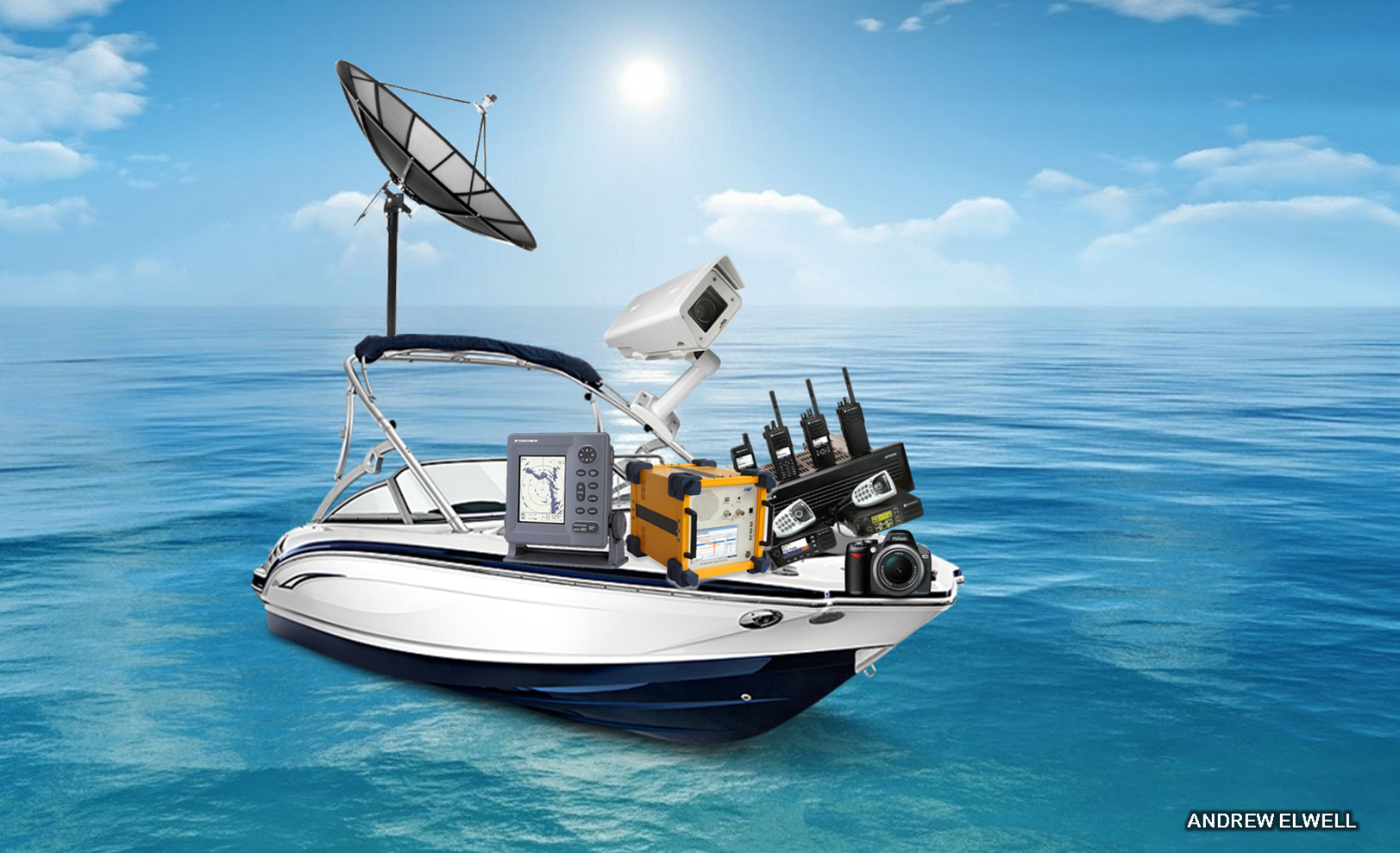
The technology used in maritime reconnaissance operations and coastal surveillance such as radar, communications and monitoring systems, RF equipment, datalinks and electro-optical sensors, is widely available but world events have recently made the acquisition of such equipment a necessity. Demand is finally catching up to supply.
MH370: Surveillance and intelligence
Following the search for MH370, and considering rising demand for surveillance systems for security and anti-piracy applications, Defence IQ takes a look a closer look at the technology available to Armed Forces and government agencies.
The strongest evidence of MH370’s location was drawn from data exchanges with an Inmarsat satellite, which indicated it landed in the Indian Ocean off Western Australia. The company has been at the forefront of airborne surveillance and intelligence innovations for decades. As an example, the global satellite heavyweight released Global Xpress this year, which is the first global Ka-band network that delivers secure, end-to-end wideband connectivity for seamless airborne, naval and land operations for governments and military end users. The technology represents a step-change in airborne intelligence, surveillance and reconnaissance capabilities and the company has already signed a Memorandum of Arrangement with the French military to use the network.
In August, Inmarsat demonstrated its intent to expand in Asia after opening its first office in China to capitalise on the telecoms and satellite opportunities that abound in the APAC region.
AGI, a US developer of commercial modelling and analysis software for the space, defence and intelligence communities, used its Systems Tool Kit (STK) software in the aftermath of MH370’s disappearance. The company said that the, “benefit of using modelling, simulation and analysis tools are to either turn up useful data on the aircraft’s position and/or help eliminate certain paths and areas.” The technology modelled the known radar and communications facilities along the planned path of the aircraft and analysed who could have seen the flight and when. It also plotted all ships in the area and created coverage grids of the search areas and performed coverage analysis using aircraft and ships.
Wider global demand for surveillance tech
Kelvin Hughes’ has a long history of developing surveillance and navigation radars, notably the Royal Navy standard KH1007 navigation radars, which have since been adopted by thirty of the world’s navies. In 2008 the company unveiled “the world’s first affordable fully coherent pulse Doppler surface search radar sensor,” called SharpEye X-Band Pulse Doppler radar.
Using Doppler techniques, SharpEye can detect periscopes, small glass-fibre boats and other targets in the clutter that normal radars cannot see and can also see them at greater distances. For armed forces and border agencies looking to track pirates, smugglers or drug-runners, this technology allows them to do so covertly, reducing the risk of being rumbled or put in harm’s way.
The company recently unveiled its new SMS port security system which incorporates a new lightweight version of SharpEye – known as the SharpEye SCV (Small Craft Variant) – and is intended for multiple applications in areas of ports and harbours that would benefit from autonomous 360 degree surveillance. The system is integrated with day/night and thermal cameras.
Terma, a Danish systems integrator, has a number of products for military and government coastal surveillance operations including the SCANTER 4000. The radar system provides simultaneous sea surface coverage and medium-range air surveillance. It has one common transmitter for surface and air and two independent receivers - one for signal processing and surface targets and one for signal processing and air targets.
Spain-based Indra recently collaborated with the Civil Guard to launch sea tests for the Perseus Project (Protection of European BoRders and Seas through the IntElligent Use of Surveillance). The programme began in 2011 and aims to develop new maritime surveillance capabilities for Europe. The trial operation involved the detection, tracking and subsequent detention of a vessel in the Strait of Gibraltar and was designed to test the interoperability of various maritime surveillance technologies.
Now forming part of the complete operational picture, demand for maritime unmanned aerial vehicles (UAVs) is also soaring as governments identify an enduring need to invest in intelligence, surveillance and reconnaissance systems. The rapid advancement of unmanned aircraft technology in the last four years has significantly reduced the costs of maritime surveillance and could be a significant growth area for the market. Maritime surveillance UAVs have seen remarkable attention from Armed Forces as the maritime domain continues to dominate economic self-interest and national security concerns. Securing shipping lanes, offshore resources, environmental surveillance and access-and-denial are just a few of the major concerns that most feel will continue to benefit from a more consistent unmanned surveillance effort, particularly as costs for these platforms decrease over time.
The emergence of al-Qaeda braches in South Asia is accelerating this requirement. Last week the group claimed responsibility for hijacking a Pakistani naval ship, intending to fire the vessel’s rockets at US ships in the Arabian Sea. Navies and surveillance agencies in the region are now actively acquiring new platforms and equipment to counter the rising threat of piracy and other illicit activities in Asian waters.
Looking specifically at the maritime UAV component, India has a growing fleet with Gemini-2 systems now being successfully tested in exercises coordinated with naval patrol boats and coastal police. Meanwhile, its ground-based Search MK II TUAV and Heron MALE comprise a comprehensive maritime observation network, with integration across other surface and air assets, as well as with civilian fishermen and digital cameras installed across 90 light houses along the nation’s coast.
Australia is also pushing for a $3 billion investment in the MQ-4C Triton to provide a network of broad area maritime surveillance. Triton is still in development but will cruise for 30 hours up to a height of 60,000 feet and offer a sensor suite that includes infrared and optical lenses.
The need for maritime surveillance capabilities in the APAC region will be discussed further at the Coastal Surveillance 2014 conference in Singapore in November. Considering recent events and regional market demand, the conference will provide a comprehensive outlook on current and future requirements including speakers from Thailand, Australia, Vietnam, Malaysia, Indonesia and the Philippines among others. Find out more by clicking the box below.

Contributor:  Defence IQ Press
Posted:  09/24/2014  12:00:00 AM EDT